

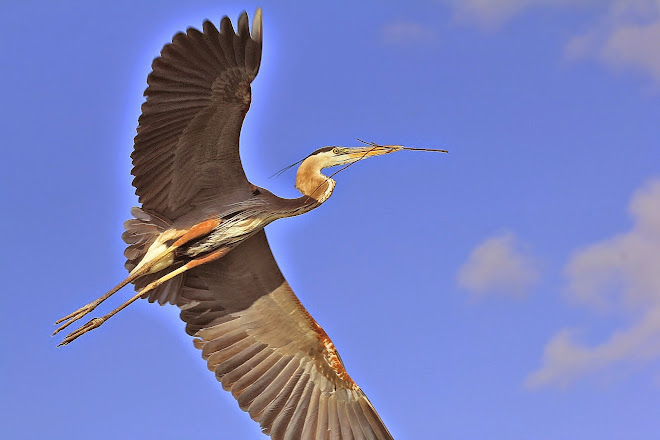


Dance of Cranes

I painted this mural in celebration to the restoration of the Kisseemee River at Riverwoods Field Lab, Florida USA, 2003
The Ethernal Dance of the Flamingo

Friday, July 11, 2014


Tuesday, March 24, 2009

Thursday, September 4, 2008
BIOLOGY 1040


This post is dedicated to the class of Biology 1040: Environmental Studies (30893/EE1) NOVA SOUTHEASTERN UNIVERSITY, 2008.
IN THIS SITE THE CLASS WILL POST THEIR COMMENTS, QUESTIONS, EDUCATIONAL MATERIALS AND INTERACT WITH EACH OTHER WITH THE GOAL TO EDUCATE ALL THE READERS THAT VISIT THIS SITE ABOUT ISSUES RELATED TO ENVIRONMENTAL STUDIES.
http://oceanawarenessgroupproject.blogspot.com/
http://guidetolivinggreen.blogspot.com/
http://howtobgreen.blogspot.com/
http://www.myspace.com/evergladeseducation
http://www.myblognatura.blogspot.com
http://www.acosam.blogspot.com
http://www.biol1040.blogspot.com
http://environmentalstudies-clayjohn.blogspot.com
http://www.sabbyr.blogspot.com
http://www.thedailytrim.blogspot.com
http://www.monahakansson.blogspot.com
http://www.mjvieth.blogspot.com
http://www.itisnt2late.blogspot.com
http://www.westcart.blogspot.com
http://www.kay-improvinglife.blogspot.com
http://www.michelleyanez.blogspot.com
http://www.traeannt.blogspot.com
http://www.mw-goinggreen.blogspot.com
http://www.skyline2008-bionews.blogspot.com
http://www.gogreenasap.blogspot.com
http://www.gordonenvirostudy.blogspot.com
http://www.jessica-environmentalstudies-jessica.blogspot.com
http://www.LeeShazier.blogspot.com
http://www.aronenvironmentalstudies.blogspot.com
http://mcarty.blogspot.com/
http://crissphoinix.blogspot.com
http://yvonnejackson-yvonne.blogspot.com/
http://stephany-environmentalstudies.blogspot.com/
http://environmentalstudies-clayjohn.blogspot.com/
http://bajrakenvirostudies.blogspot.com/
Friday, July 25, 2008
CURRICULUM VITAE J. Luis Jimenez

PROFESSIONAL PROFILE
International ecologist, artist and filmmaker with experience and training in film, television, curriculum development, writing and producing multimedia resources in areas of adult and children education; environmental education; Storytelling; creative writing; entertainment; food safety; and agriculture (in both, English and Spanish languages).
EDUCATION
�� Doctoral Candidate in
�� M.A. Film and Video The
�� Licenciature in Communications Universidad Central de Venezuela, 1989 (5 year program)
COMPUTER SKILLS
Adobe PageMaker, Adobe PhotoShop, WordPerfect, Word, Simple-Text, ClarisWorks, PowerPoint, Avid, Adobe Audition, Internet Communications Skills in Macintosh and PC platforms
PROFESSIONAL EXPERIENCE
�� Adjunct Professor March 2003- present
Nova South Eastern University.
�� Blogger www.neoselva.blogspot.com October 2007-present
A website dedicated to environmental issues and art
�� Teaching Assistant/Broadcast Journalism September 2004-2008
�� Research Assistant September 2003-Sept. 2004
Florida Atlantic University, Center for environmental Studies, Riverwoods Field Laboratory
�� Director and Co-owner April 1997-November 2002 Neoselva Zoological Conservancy Inc. A 31-acre ranch, with more than 500 exotic animals dedicated to provide Animal- Assisted Therapy, environmental education and arts education to disadvantaged children. In conjunction to the children���s program, the ranch promoted a successful breeding program for rare and endangered animals.
�� Assistant In Pesticide Education/Multimedia Production January 2001-August 2002 University of Florida/IFAS, Department of Food Science & Human Nutrition
- Develop multimedia productions and curricula for educational purposes
- Contact extension faculty and educators in counties around
�� Curriculum Designer/Project Coordinator, Welfare-to-Work. March 1999-January 2001 University of Florida/IFAS, Department of Family Youth and Community Sciences
- Develop educational curricula (Food Safety at the Tip of Your Fingers)
- Contact extension faculty and educators in counties to solicit interest in the program
- Conduct train-the-trainer programs
- Work with IFAS Wages Director to develop evaluation methods
- Coordinate the overall performance of educational programs offered by county faculty
�� Multimedia Producer and Project Coordinator October 1997-March 1999
- Curriculum development and training for the Food Handler Training Program
- Responsible for producing/coordinating multimedia educational resources & promotional Materials for the Food Handler Training Program offered by Cooperative Extension Service state wide, and for sale publications
- Establishing contacts with the media, and organizing satellite broadcasts
�� Translator & Narrator for agricultural publications and videos October 1997-April 2002
�� Film Editor and Timer October 1995-March 1997 Color-Lab Motion Pictures Inc.
- Preparing, cutting, editing and synchronizing sound for motion picture���s film
- Timing and Color Correcting motion pictures film
MULTIMEDIA ORIGINAL PRODUCTIONS
�� ���The Ale House Food Safety Program & Direct Hand Contact Plan��� video. June 2000
�� ���Food Safety at the Tip of Your Fingers��� Training video and curriculum. July 2001
�� ���Tales of a Shaman��� A collection of original environmental short stories. 1984-1997
�� ���Musical ���Tales of a Shaman��� (Author & Director) Written for the
�� ���Mitu Ararauna��� 20 minute, 16mm film. (The journey of a Shaman struggling to save the
�� ���Warrior of the Darkness��� 3 min. 16mm film about the interaction between an autistic boy and his mother through a native legend. ���9TH ANNUAL IMAGE AWARDS LUNCHEON��� March 1995
�� ���The Flamingo��� 5 min. video about the biology of the flamingoes. Series ���RESENA��� Foundation for the Development of Visual Arts Aired in Venezolana de Television/Channel 8,
�� ���Bills, Legs and Feathers��� 5 min. video about the adaptations of birds to their environment. Series ���RESENA���, Foundation for the Development of Visual Arts Aired in VTV/Channel 8.
�� ���When a Species Dies��� 30-min. video for conservation of birds. Funded by Wildlife Conservation International/
�� ���Arte Vivo��� 7 videos (endangered fauna in
TEACHING AND CONSULTANT EXPERIENCE
�� Assistant Journalist for IUCN-US, World Conservation Union for the IV Congress on
- Established a permanent system of communication and distribution of information
�� Consultant in Eco-Tourism and Wildlife for Lost World Adventures Agency. 1991-1993
- Organization of educational ecological tours
- Established relations with Venezuelan Non-Governmental Organizations
�� Trilingual Eco-Tourism Leader and Instructor in
- Developed educational ecological expeditions for international travel agencies
�� Represented BIO-Tour/GBS
�� Consultant for BIO-Tour/GBS
- Feasibility analysis for implementing Eco-tourism programs in
�� Instructor ���INTRODUCTION TO BIRD WATCHING��� Audubon Society of Vzla. 1988-1989
�� Teacher Assistant, course ���BIOLOGY OF BIRDS���. Universidad Simon Bolivar. 1985-1988
�� Consultant for FUNDACION TERRAMAR S.C. September 1988
- Training on identification and census of birds on La Blanquilla Island
- Study of the status of the Yellow-Shoulder Parrot (Amazona barbadensis).
�� Consultant for INSTITUTE OF NATURAL RESOURCES/USB. August 1988
- Trained personnel and collected ornithological data on the environmental impact of potential development on the delta of the Piritu River, Venezuela
PUBLICATIONS
�� ���The Legend of the Red Siskin���
- Bulletin of the Audubon society, December 1985
- Bulletin of the Venezuelan Ornithological Federation. February 1986
�� ���The Environmental Education Gets Established in the Continent��� Photographer. Author: Marco A. Encalada, Organization for American States,
�� ���Education & Environment in Andean Countries: Educational Strategies��� Photographer. Author: Beatrice Edwards, Organization for American States,
�� ��� Behavior and Biology of the Hawk-Headed Parrot in
SEMINARS AND WORKSHOPS ATTENDED
�� Agricultural Communicators in Education/ACE 2001 Conference.
�� EATT, Symposium on Food Security and Nutritional Education in
�� Ready, Work, Grow; A National Workforce Conference.
�� CYFAR 2000, Children, Youth and Families at Risk. Speaker, N.C. March 2000
��
�� First Workshop on Environmental Protection and Leadership in Eco-Tourism. Ministry of Defense, Army Forces Co-op of
�� First Workshop on the Biology of Conservation. Wildlife Conservation International/
�� Audubon Ornithological Workshop in
MEMBERSHIP AND ACTIVITIES
�� Florida Food Manager certification, Florida Department of Business and Professional Regulations, since 1997
�� Member of the Foreign Press Center,
�� Member of the
�� Member of the Audubon Society of
�� American Pheasant and Waterfowl Association
�� International Waterfowl Association
VOLUNTEER WORK
��
�� Radio Fe y Alegria. Taught elementary education to disadvantage adults to prepare them to join the workforce.
�� Hospital San Juan de Dios. Worked with physical disabled children.
LANGUAGES
Spanish (Fluent) English (Fluent), Italian (Speaking and Reading), Portuguese (Speaking and Reading)
HONORS
�� OAS (Organization of American States) Graduate���s Full Scholarship Washington D.C. 1992
�� Wild Wings/Underhill Foundation and Dorr Scholarship. Audubon workshops��� in
�� Wildlife Conservation International/New York Zoological Society. Grand for the production of the ecological documentary ���When a Species Die���, Venezuela 1987
Saturday, March 22, 2008
SURVIVAL.COM/30 BRAINS
Professor Jose Luis Jimenez IN THIS SITE THE CLASS WILL POST THEIR COMMENTS, QUESTIONS, EDUCATIONAL MATERIALS AND INTERACT WITH EACH OTHER WITH THE GOAL TO EDUCATE ALL THE READERS THAT VISIT THIS SITE ABOUT ISSUES RELATED TO ENVIRONMENTAL STUDIES.
Wednesday, April 23, 2008
FINAL ESSAY
Darwin and Natural Selection (Evolution)Most educated people in Europe and the Americas during the 19th century had their first full exposure to the concept of evolution through the writings of Charles Darwin . Clearly, he did not invent the idea. That happened long before he was born. However, he carried out the necessary research to conclusively document that evolution has occurred and then made the idea acceptable for scientists and the general public. This was not easy since the idea of evolution had been strongly associated with radical scientific and political views coming out of post-revolutionary France . These ideas were widely considered to be a threat to the established social and political order.It was during the beginning of the voyage that Darwin read the early books of Charles Lyell and became convinced by his proof that uniformitarianism provided the correct understanding of the earth's geological history. This intellectual preparation along with his research on the voyage were critical in leading Darwin to accept evolution. Especially important to the development of this understanding was his 5 weeks long visit to the Gal��pagos Islands in the Eastern Pacific Ocean . It was there that he began to comprehend what causes plants and animals to evolve, but he apparently did not clearly formulate his views on this until 1837.The Gal��pagos Islands have species found in no other part of the world, though similar ones exist on the west coast of South America . Darwin was struck by the fact that the birds were slightly different from one island to another. He realized that the key to why this difference existed was connected with the fact that the various species live in different kinds of environmentsDarwin identified 13 species of finches in the Gal��pagos Islands . This was puzzling since he knew of only one species of this bird on the mainland of South America , nearly 600 miles to the east, where they had all presumably originated. He observed that the Gal��pagos species differed from each other in beak size and shape. He also noted that the beak varieties were associated with diets based on different foods. He concluded that when the original South American finches reached the islands, they dispersed to different environments where they had to adapt to different conditions. Over many generations, they changed anatomically in ways that allowed them to get enough food and survive to reproduce.Today we use the term adaptive radiation to refer to this sort of branching evolution in which different populations of a species become reproductively isolated from each other by adapting to different ecological niches and eventually become separate species.Darwin came to understand that any population consists of individuals that are all slightly different from one another. Those individuals having a variation that gives them an advantage in staying alive long enough to successfully reproduce are the ones that pass on their traits more frequently to the next generation. Subsequently, their traits become more common and the population evolves. Darwin called this "descent with modification."The Gal��pagos finches provide an excellent example of this process. Among the birds that ended up in arid environments, the ones with beaks better suited for eating cactus got more food. As a result, they were in better condition to mate. Similarly, those with beak shapes that were better suited to getting nectar from flowers or eating hard seeds in other environments were at an advantage there. In a very real sense, nature selected the best adapted varieties to survive and to reproduce. This process has come to be known as natural selection.Darwin did not believe that the environment was producing the variation within the finch populations. He correctly thought that the variation already existed and that nature just selected for the most suitable beak shape and against less useful onesBoth Darwin and Wallace failed to understand an important aspect of natural selection. They realized that plant and animal populations are composed of individuals that vary from each other in physical form. They also understood that nature selects from the existing varieties those traits that are most suited to their environment. If natural selection were the only process occurring, each generation should have less variation until all members of a population are essentially identical, or clones of each other. That does not happen. Each new generation has new variations. Darwin was aware of this fact, but he did not understand what caused the variation. The first person to begin to grasp why this happens was an obscure Central European monk named Gregor Mendel . Through plant breeding experiments carried out between 1856 and 1863, he discovered that there is a recombination of parental traits in offspring. We will let Julian Huxley sum up Darwin 's place in the history of science:" Darwin 's work ... put the world of life into the domain of natural law. It was no longer necessary or possible to imagine that every kind of animal or plant had been specially created, nor that the beautiful and ingenious devices by which they get their food or escape their enemies have been thought out by some supernatural power, or that there is any conscious purpose behind the evolutionary process. If the idea of natural selection holds good, then animals and plants and man himself have become what they are by natural causes, as blind and automatic as those which go to mould the shape of a mountain, or make the earth and the other planets move in ellipses round the sun. The blind struggle for existence, the blind process of heredity, automatically result in the selection of the best adapted types, and a steady evolution of the stock in the direction of progress...Darwin 's work has enabled us to see the position of man and of our present civilization in a truer light. Man is not a finished product incapable of further progress. He has a long history behind him, and it is a history not of a fall, but of an ascent. And he has the possibility of further progressive evolution before him. Further, in the light of evolution we learn to be more patient. The few thousand years of recorded history are nothing compared to the million years during which man has been on earth, and the thousand million years of life's progress. And we can afford to be patient when the astronomers assure us of at least another thousand million years ahead of us in which to carry evolution onwards to new heights."NOTE: The phrase "survival of the fittest" was apparently first used in 1851 by the influential British philosopher Herbert Spencer (1820-1903) as a central tenet of what later became known as "Social Darwinism." He misapplied Darwin 's idea of natural selection to justify European domination and colonization of much of the rest of the world. Social Darwinism was also widely used to defend the unequal distribution of wealth and power in Europe and North America at the time. Poor and politically powerless people were thought to have been failures in the natural competition for survival. Subsequently, helping them was seen as a waste of time and counter to nature. From this perspective, rich and powerful people did not need to feel ashamed of their advantages because their success was proof that they were the most fit in this competition. Despite misgivings by Alfred Wallace and other naturalists, Charles Darwin began to use "survival of the fittest" as a synonym for "natural selection" in the 5th edition of Origin of Species, which was published in 1869.http://anthro.palomar.edu/evolve/evolve_2.htm (Darwin and Natural Selection)http://www.blupete.com/Literature/Biographies/Science/Darwin.htm (The Scientist: Charles Darwin , Biography)History and Evolution of TurtlesReptiles became part of the evolutionary scene approximately 300 million years ago at the end of the Paleozoic Era. Whereas, the first turtle fossil wasn't discovered until about 80 million years later during the Triassic period, which was the beginning of the Age of Reptiles. The first fossil was that of Proganochelys, a freshwater, much larger version of modern day snapping turtles. There is quite a mystery surrounding turtle evolution; it is thought that it happened in a relatively short time due to minimal fossil evidence leading up to the find of Proganochelys. It is thought that a minute change in genetic composition could lead to the creation of a carapace and plastron, thus a small genetic change could have lead to a huge evolutionary advantage. (Spotilla, 2004) During the Mesozoic Era turtles went back and forth between land and sea many times, and it wasn't until about 120 million years ago during the Cretaceous period that modern sea turtles evolved. Thus, flippers and other sorts of evolutionary advantages didn't result until that time.At the end of the Mesozoic there was a huge mass extinction, possibly the most well-known of all mass extinctions due to the loss of the dinosaurs. After the mass extinction approximately 66 million years ago, the Age of Reptiles gave way to the Age of Mammals. The reptiles that faired the best during and after the extinction were perhaps the sea going turtles. Four families of sea turtles survived, Toxochelyidae, Protostegidae, Cheloniidae and Dermochelyidae. The former two families have since become extinct, Toxochelyidae during the Eocene epoch and Protostegidae during the Oligocene epoch. There are currently seven species of sea turtles swimming in the oceans, six of which are in the family Cheloniidae, the other is the solitary member of the Dermochelyidae family. This paper will compare four of the seven sea turtle species, leatherbacks, loggerheads, greens and hawksbills. All are from the Cheloniidae family with the exception of the leatherback which is from Dermochelyidae.References1. Broward County Florida-Biological Resources Division. (n.d.)Sea turtle conservation program. Retrieved February 9, 2005 from http://www.co.broward.fl.us/bri00600.htm 2. Caribbean Conservation Corporation and Sea Turtle Survival League. (2005) Species Fact Sheets. Retreived June 5, 2005 from http://www.cccturtle.org/contents.html3. Jones, A. (2004) Sea turtles: old viruses and new tricks. Current Biology, 14, R842-R843. 4. Lewison, R., Crowder, L., Read, A., & Freeman, S. (2004) Understanding impacts of fisheries bycatch on marine megafauna. TRENDS in Ecology and Evolution, 19 (11), 598-604. 5. National Oceanic and Atmospheric Administration-Office of Protected Resources. (n.d.) Marine Turtles. Retrieved February 2, 2005 from http://www.nmfs.noaa.gov/pr/species/turtles
Posted by Tmoultrie
EVOLUTION AND THE TURTLE/TORTOISE
(applying Darwin's theory)
"In the struggle for survival, the fittest win out at the expense of their rivals because they succeed in adapting themselves best to their environment." (Charles Darwin)
Darwin's Theory of Evolution had never been of any real interest to me personally. Because of my religious beliefs I would quickly resist any talk about evolution, big bang theory, etc. However, the above quote by Darwin strongly caught my attention. As I began to read about it there are views that I do not agree with but others that I do. This post however excludes any personal views that I may have and strictly applies the theory of Evolution as it pertains to turtles and tortoises. A total of eight (8) turtles were observed and researched: the Box Turtle, Russian Tortoise, Red Foot Tortoise, Central America Wood Turtle, the Yellow Foot Tortoise, and the Mud Turtle. During observation there were noticeable differences physically. Differences in color, neck length, mouth (rounded/pointed, sharp/not sharp), texture of shell, tail length, legs (some thick, some not so), webbed feet and non webbed feet, curved and straight claws. So what is the reason for all of the variations of characteristics? This is the essence of what the Darwin theory is about.
For starters we must understand Darwin and this very popular theory of his. The premise of Darwin's theory of Evolution is that all life is related and has descended from a common ancestor. Darwin's general theory presumes the development of life from non-life and stresses a purely naturalistic (undirected) "descent with modification". That is, complex creatures evolve from more simplistic ancestors naturally over time. In a nutshell, as random genetic mutations occur within an organism's genetic code, the beneficial mutations are preserved because they aid survival -- a process known as "natural selection." These beneficial mutations are passed on to the next generation. Over time, beneficial mutations accumulate and the result is an entirely different organism (not just a variation of the original, but an entirely different creature). According to the great biologist Ernst Mayr, these observations have been amply demonstrated in biology, and even fossils demonstrate the veracity of these observations. In lamens terms, biology and fossils prove this idea to be true. The main idea in the theory is Natural Selection. To simplify, Natural selection (a slow process)is the preservation of a functional advantage that enables a species to compete better in the wild. With that stated let's see how this applies to our little friends.
I must admit, I didn't think that this assignment would be of any real interest being that I've never before been interested in knowing anything about turtles. Having to begin this quest while being under the weather did not make it any better either. However, the more information I gathered, the more interesting it became. Specifically, the turtle with the most revealing information and the one that really started my "juices flowing" was the Russian Tortoise.
In-class observation:
color: light green w/ black spots (with no hinge for closure)-- this is possibly to aid in camouflaging against predators. The reason I say this is because the color is a little bland and this tortoise is found in dry open landscapes, sand and clay deserts with sparse grasses and brushes, rocky deserts also and hillsides. These types of areas are not generally colorful. So had the tortoise been colorful it would stand out tremendously!
long straight claws and non-webbed feet: no web needed as this is a land turtle and the claws are straight because they burrow in sandy or loamy burrows. Meaning the soil is not stiff which means no need for the curved claws used for real digging.
long neck: during courtship he male approached female and repeatedly circles her. Then he stops, faces her head on and extends his neck and rapidly jerks up and down. If he had a short neck he wouldn't be able to extend and practice this ritual.
diet: the Russian Turtle is active but slows down in June and July (summer), leaving the burrow only dawn or dusk. The reason is that the summer temperatures that exceed 85 degrees Fahrenheit are problematic for them. So they "chill" during the summer. What does this have to do with what they eat? Well, what a coincidence it is that at summer's end, they feed on dried grasses and twigs! What else is available after hot summers in the deserts? Surprisingly enough in habitat, they feed on vegetation, flowers, twigs and fruits. Now that's survival for you! Oh, what about water? Well during rainy seasons, they drink water from puddles that form but while they are chilling in the summer, they rely on metabolic water (hold their urine until the rainy season).
The YELLOW FOOT TORTOISE
size: female is larger than male. The reason for this is that the larger the female, the more eggs it produces.
mouth: rounded, not sharp. This is possibly because of it's diet. This tortoise feeds on grasses, fallen fruit, plants, mushrooms, snails, worms, and other slow moving animals. A sharp mouth is not needed for this type of diet, nothing to rip or tear really.
feet: feet are non-webbed because it dwells on land.
THE MUD TURTLE:
claws: claws are curved. This characteristic is essential since the mud turtle hibernates in the mud which of course is more stiff than sand or softer soil.
feet: feet are webbed as these turtles do swim
mouth: pointed/sharp. This more than likely is due to the type of diet that this turtle indulges in. Wonderful items on the menu are: insects, tadpoles, and fish.
THE BOX TURTLE:
Now this turtle has of course oen or more of the characteristics of the others. We all know that they will have either webbed or non-webbed feet, curved or straight claws, colorful or non-colorful or bland shell, etc. The main characteristic I would like to note about this turtle is one that none of the others possess and that is the fact that the shell has a "hinge". The hinge allows the turtle to retract its legs and close the front and hind part of ots shell. Why is this so? As I looked through different sources I tried to find information that would elude to why this is so. The only item that stood out to me is the the purpose of this is to "protect against predators". Now this is sort of common sense, but why wasn't this piece of information present in the description of all the others. I think I may know why. One itme that this mentioned about this turtle that is not in y research of all the others is that this is the SLOWEST REPRODUCING species in the world. So while the others can hide under brushes and in the mud and under trees, this species is so precious that it must take extra procautions and not just depend on outer elements to aid in prolonging its existence but needed a true protector from its own body.
Conducting these observations and research was very enlightening. For me it shd some light on more than just turtles and tortoises. It taught me a little more about life and how this idea of the "survival of the fittest" applies to us as humans truly! If a turtle can adapt and persevere and be tenacious as they are, surely we can too. I leave you with a culminating quote from the great scientist Ernst Mayr:
Darwin imagined it might be possible that all life is descended from an original species from ancient times. DNA evidence supports this idea.
Probably all organic beings which have ever lived on this earth have descended from some one primordial life form. There is grandeur in this view of life that, whilst this planet has gone cycling on according to the fixed law of gravity, from so simple a beginning endless forms most beautiful and most wonderful have been, and are being evolved.
Sunday, February 17, 2008
SAVE THE TURTLES! CUIDEMOS LAS TORTUGAS!


ESTA HISTORIA VISUAL FUE CREADA GRACIAS A LA AYUDA DE TORTUGAS Y GALAPAGOS DE TODO EL MUNDO...
AHORA VIVEN UNA VIDA FELIZ EN MI JARDIN.
HOSTED BY YAGUI; THE FOX